
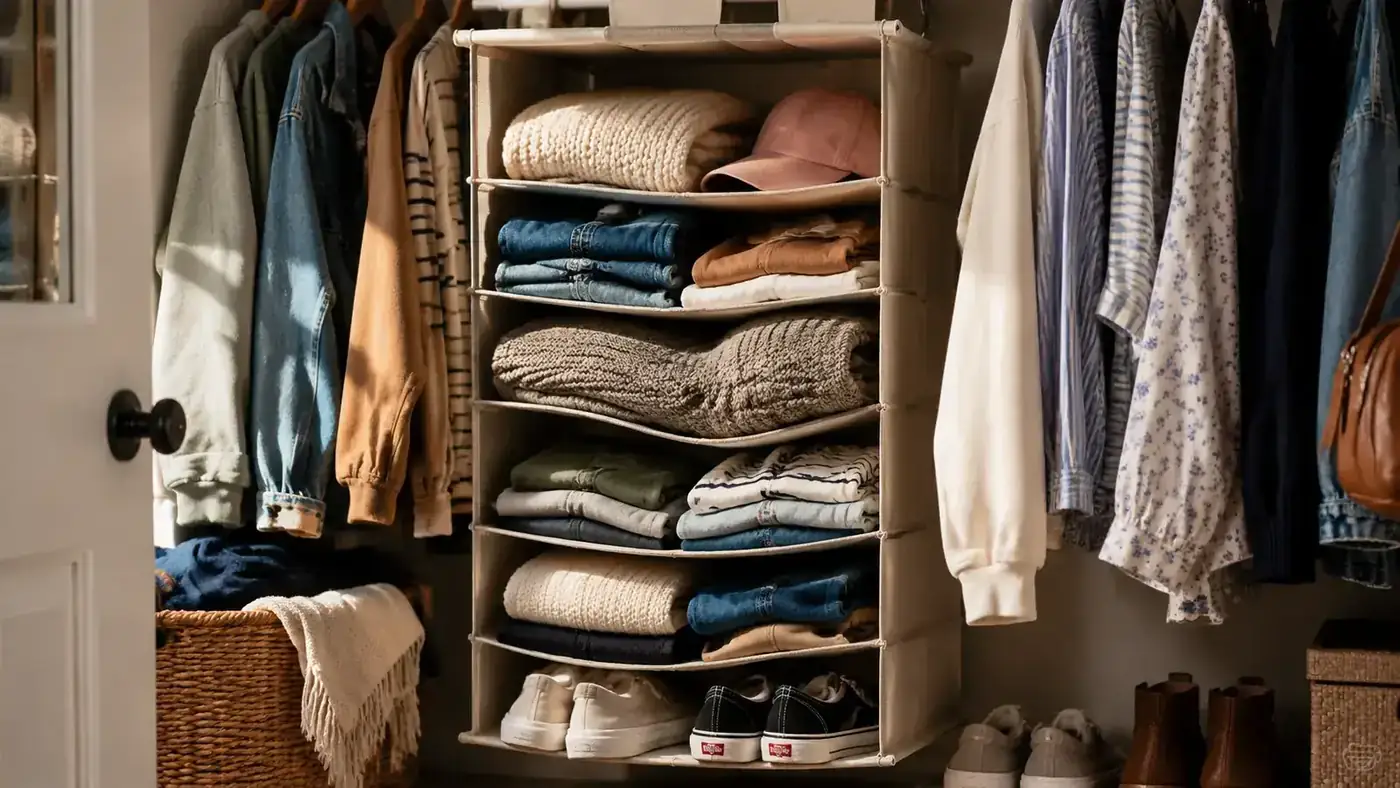
Let me tell you the thing that is not in the listing photos for the MAX Houser hanging closet organizer. It is not the hooks, which you can see if you zoom in. It is not the fabric color, which photographs accurately. It is the way the center of each shelf tier quietly bows downward when you load it with anything heavier than a cotton t-shirt. That one detail determines whether this shelf works beautifully in your closet or drives you quietly nuts for as long as it hangs there. And with over 14,000 Amazon reviews and a price that rounds to twelve dollars, a lot of people have bought this shelf, loved it, or returned it, and the reason almost always comes down to a few specific things the product page glosses over.
I have had the MAX Houser 6-tier shelf in my house for two years now across three closets. I have tested it on two different rod types, overstuffed it deliberately to see where it fails, and yes, I accidentally put one through a wash cycle because my youngest thought it was laundry. I have also talked to friends who sent theirs back after a week and friends who have ordered four more. The gap between those two groups is almost entirely about what they loaded it with and what kind of rod they have. Here is everything I know.
The Quick Verdict
A genuinely clever closet tool that works well for light folded clothing on standard rods. Load it correctly and it lasts for years. Load it wrong or hang it on the wrong rod and you will be irritated within a week.
Amazon Check Today's Price →If your closet rod has open space below your hanging clothes, this shelf fills it without a single tool or a single screw.
The MAX Houser 6-tier shelf has over 14,000 Amazon ratings and takes about forty seconds to install. Read the full review below first so you know exactly whether your closet setup is a match.
Amazon Check Today's Price on Amazon →How I've Used It: What Two Years and Three Closets Actually Taught Me
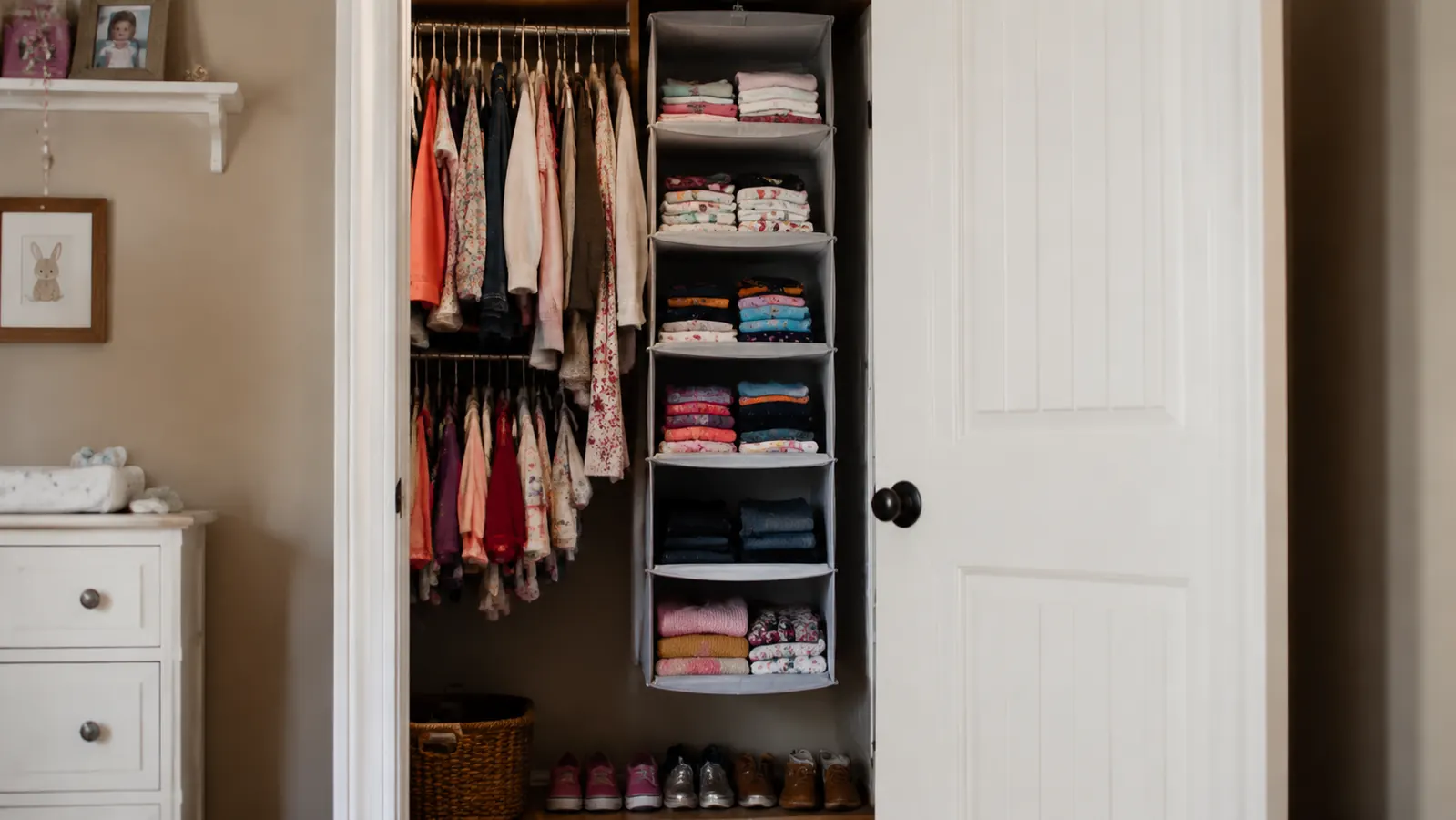
The first shelf went into my youngest son Evan's room. He is seven and has a tiny bedroom with a short closet rod that holds maybe eight hanging items. The rest of the rod was completely unused. I hung the MAX Houser shelf on that empty stretch, loaded the tiers with his folded shirts and shorts, and watched to see what happened. That was two years ago. The shelf is still there, still level, and Evan can actually reach the lower four tiers himself, which means he occasionally, almost by accident, puts his own clothes away.
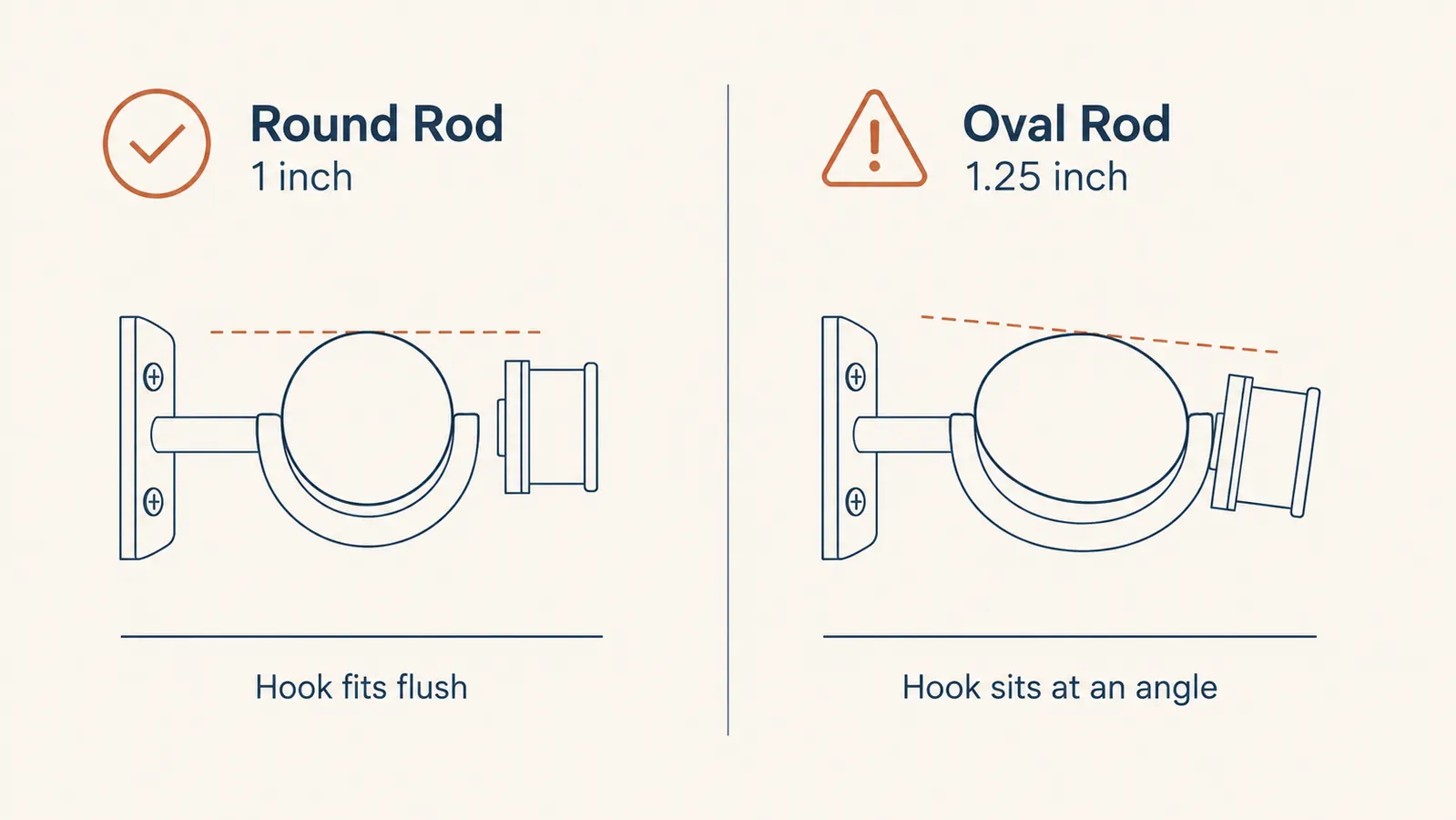
The second shelf went into my own primary bedroom closet, which has an older builder-grade oval rod roughly one and a quarter inches across. That is where things got educational fast. The hook still went over the rod, but instead of hanging straight down the shelf leaned forward at maybe a ten-degree angle. Not dramatic, nothing fell, but the shelf looked crooked and items on the front edge of each tier slid toward the edge. I fixed it eventually by using a small rubber band around the hook to create some friction, but that is a workaround, not a feature. If you have an oval or oversized rod, check the diameter before ordering.
The third shelf, the one that went through the wash, was a spare I had bought to test in a hall closet. My youngest found it on the floor before I installed it and shoved it in with a load of towels. The fabric panels survived without shrinking or tearing. The wire frame came out fine. The hooks lost some of their coating and got a little rough. I still use it but that shelf gets the lightweight items only since I trust the hooks a little less now. The lesson: the fabric is more durable than it looks, the hooks less so.
The Weight Question Nobody Answers Clearly
Here is the thing that will tell you more than any other single fact: the MAX Houser listing does not publish a per-shelf weight limit. You will not find one in the product description, in the specs table, or in the Q&A section, at least not with a definitive number from the brand. What the listing says is that the hooks are sturdy. What reviewers say varies wildly because what people load onto the shelves varies wildly.
My own testing puts the comfortable per-tier limit at roughly three to four pounds of folded clothing. That is about five or six lightweight cotton shirts, or three pairs of average jeans, or four folded long-sleeve tops. Once I pushed a tier past that, I saw the center of the fabric panel bow. The bow does not tear the fabric but it makes items roll toward the center, which is annoying and eventually means things fall off. The total six-tier capacity I would estimate at about eighteen to twenty-two pounds if the weight is distributed evenly and kept lighter on the upper tiers.
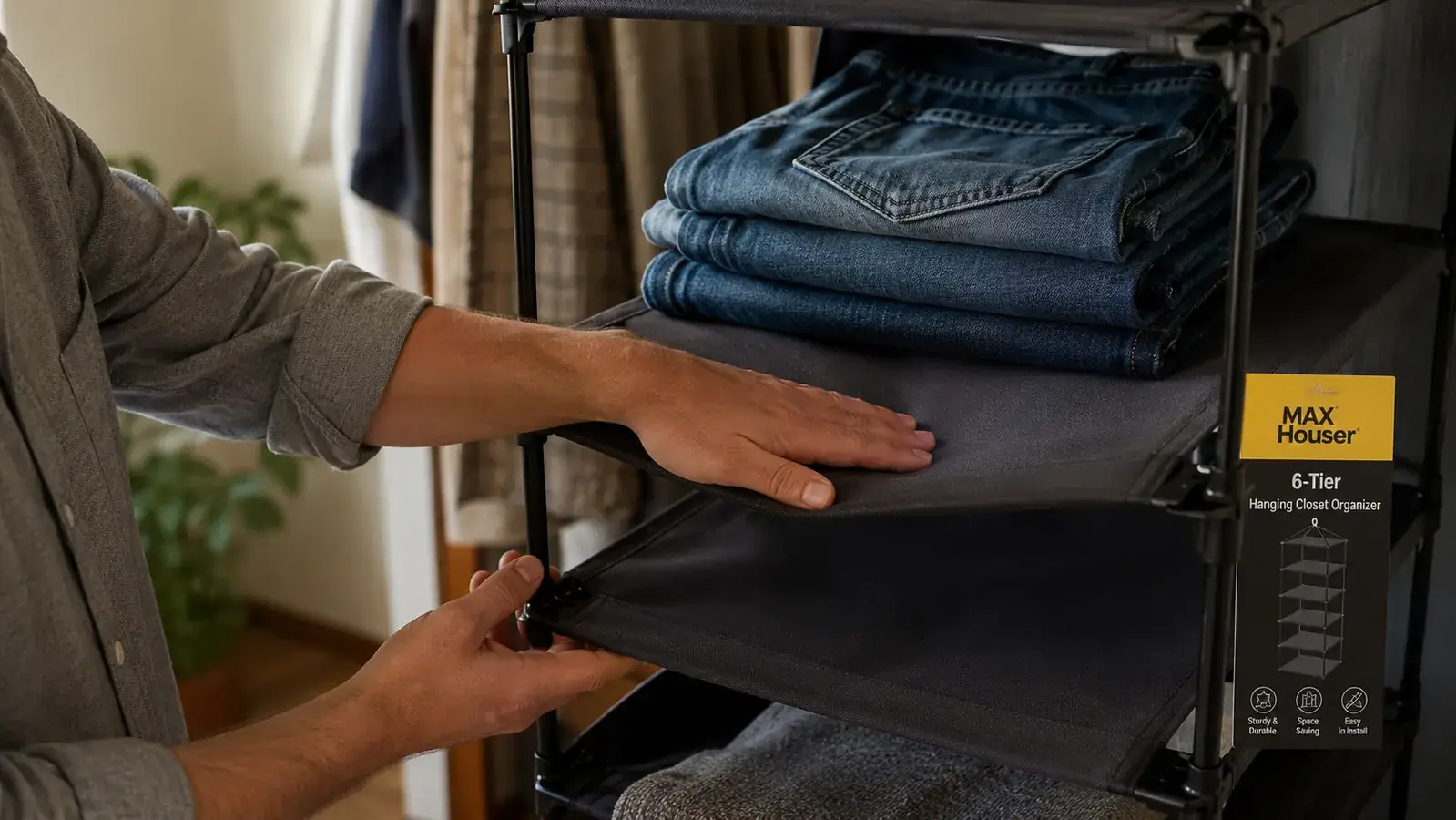
Heavy sweaters, fleece pullovers, folded denim, and towels will give you trouble on this shelf. Not because the frame or the hooks fail, but because the fabric panels are not rigid. Think of each tier as a fabric hammock with a wire perimeter. Load it with a light folded shirt and it holds flat. Load it with a dense wool sweater and the center sags. That sag is the first complaint in one-star reviews and it is entirely preventable if you know about it going in. For a guide to loading and arranging a shelf like this correctly, my piece on how to double your closet space with a hanging shelf covers the setup step by step.
Rod Fit: The Specific Measurements That Matter
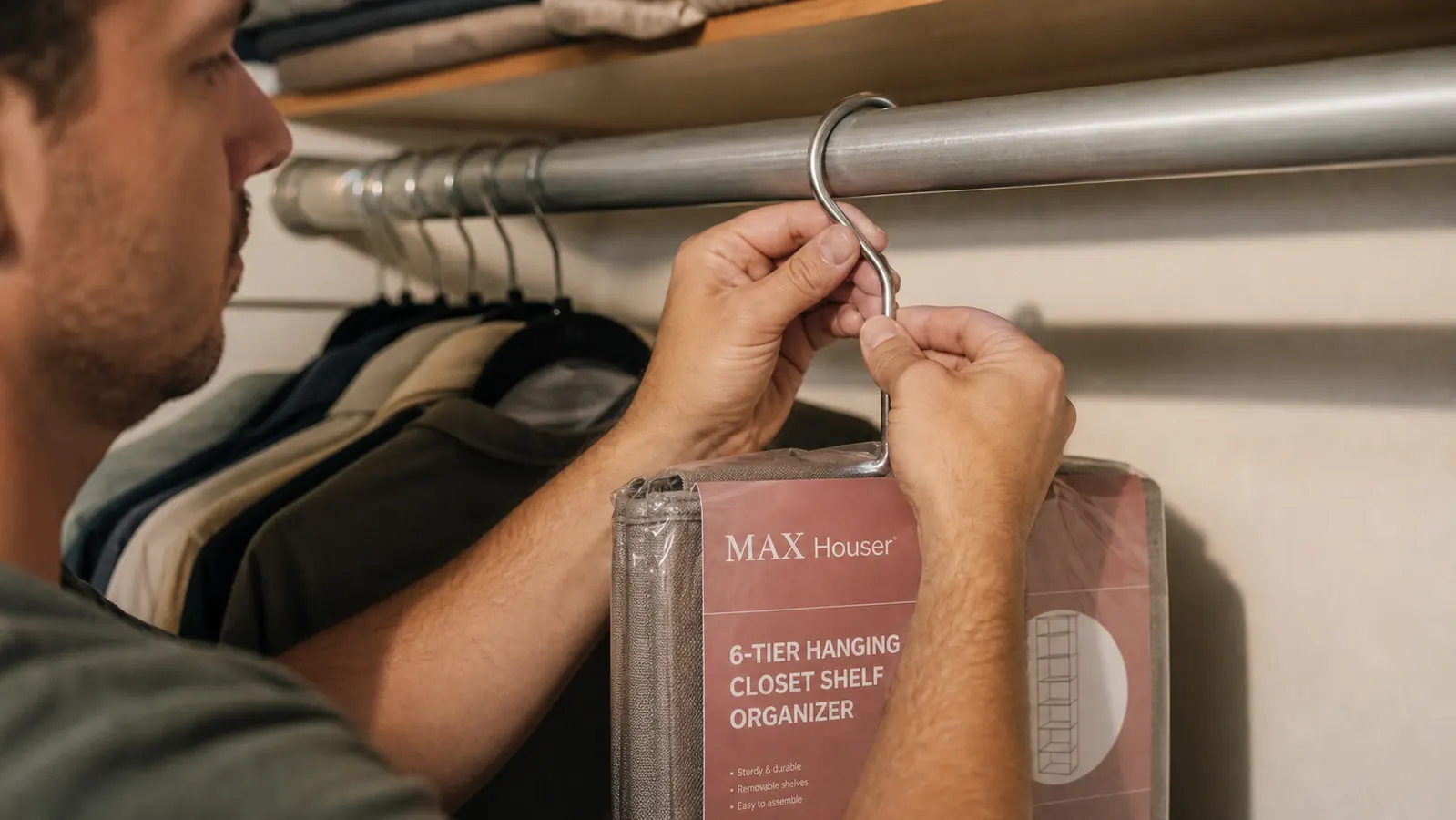
The S-hooks on the MAX Houser shelf fit standard round closet rods in the three-quarter inch to one-inch diameter range. That covers the vast majority of hollow white-painted rods in rental apartments and newer homes, which is probably why the product has such a high overall rating. Most people have that rod. Most people hang this shelf and it sits perfectly level.
The rods where you will have trouble are oval-profile rods (common in builder-grade closet systems from the early 2000s), solid wooden rods approaching one and a quarter inches in diameter, and the flat metal rods found in some Ikea PAX units and ELFA systems. On these rods the hook either tilts, wiggles, or in the case of very flat metal rods, does not grip well enough to stay centered. The shelf will still hang, but the angle can cause items to slide toward the front edge of the tiers.
The quickest check before ordering: wrap a soft measuring tape around your closet rod and divide by pi, which is roughly 3.14. A circumference of about 3.1 inches means a one-inch round rod and you are in the clear. Anything above 3.5 inches and I would either measure carefully or check with the seller before buying.
The gap between people who love this shelf and people who return it almost always comes down to two things: what they loaded onto it and what rod they hung it from. Get those right and the shelf is hard to beat at any price.
What the Listing Photos Do Not Show You
The Amazon photos show a shelf with three or four items per tier, all folded with department-store precision, all the same size and weight, under studio lighting. Nobody in real life loads a closet organizer that way, and the photos do not show you what happens when Evan grabs a shirt from the third tier and accidentally drags two others with it, or when my oldest deposits a stack of folded items on one side of a tier rather than spreading them evenly.
What the photos also do not show: how much rod length the shelf takes up. Six hanging tiers need about thirteen to fifteen inches of closet rod. If your rod is at capacity with hanging clothes, you cannot just clip this shelf on the end and expect it to work. You need to relocate some hanging items first, which can require buying a second rod or rearranging your whole hanging system. Not a dealbreaker, but definitely a planning step most buyers do not think about until the shelf arrives.
The photos also cannot communicate how much the shelf swings when first installed. On a smooth round rod with no friction, the shelf swings freely. A gentle hip-check from a passing kid can send the whole thing rotating along the rod until it bumps the hanging clothes at the end. I solved this by clipping a small binder clip on the rod just past the hook to stop lateral migration. Again, not a fault exactly, just a reality of the physics that no listing photo can show you.
Two Years of Wear: What Has Changed and What Has Not
The fabric on all three of my shelves is still structurally intact after two years. No holes, no fraying at the corners, no seam separation. The woven material is genuinely tougher than the price implies, and the corner reinforcements where the wire frame meets the fabric have held without loosening on any unit.
The wire frame on the two shelves that have not been through a wash cycle remains powder-coated and rust-free. The coating on the hooks shows minor wear where they contact the rod, a small patch of rubbing where the metal-on-metal contact gradually buffs through the powder coat. It has not caused any rust in two years, but if you live somewhere humid, that is worth keeping an eye on.
The main wear issue is the fabric sag I mentioned earlier. On the shelf in Evan's closet, which has always been correctly loaded with light items, there is zero sag even now. On my own closet shelf, where I occasionally overloaded a tier during a closet refresh and then did not redistribute, two of the six tiers show a permanent slight bow in the center even when empty. The fabric stretched under the load and kept some of that stretch. It still holds items fine but it no longer lies flat. That is the shelf telling me I pushed past the comfortable weight limit for that tier.
What I Liked
- Installs without tools in under a minute on a standard round rod
- Fabric is genuinely durable for lightweight to medium clothing over years of use
- Gives kids visible, reachable storage at eye level which changes how they use their closet
- Wire frame resists rust through normal use
- Lightweight and easy to remove or relocate when closet needs change
- Strong value for a product that does not compete on features but competes on accessibility
Where It Falls Short
- No published weight limit per tier anywhere on the product page
- Fabric sags permanently under heavy loads, there is no coming back from that
- Hook tilts on oval rods and oversized wooden rods
- Shelf slides freely along the rod and needs a stop clip to prevent lateral migration
- Top two tiers require adult-height reach, not useful for independent child access
- Water and wash exposure degrades hook coating and reduces hook grip
Who This Is For
This shelf is the right call for anyone with a standard round rod, open rod space below hanging clothes, and a plan to store only lightweight folded items: t-shirts, leggings, shorts, light long-sleeve tops, thin pajamas, and similar. It is also a good fit for anyone in a rental or temporary living situation who cannot install built-in closet systems. The zero-tools setup and easy removal make it genuinely commitment-free. It is particularly effective for children's closets where the goal is giving kids independent access to their own clothes. For a full picture of everything this shelf can do across the house, see my piece on the long-term review of the MAX Houser hanging shelf which covers six months across three closets in detail.
Who Should Skip It
If your rod is oval or larger than one inch in diameter, measure first and contact the seller before ordering, because the tilt issue is real and persistent. If your priority is storing heavy folded items, sweaters, denim, towels, or anything dense, this shelf will sag and you will regret it. If your closet rod is already packed with hanging clothes, you need to find room to relocate items before adding this shelf, which changes the value calculation. And if you want something that will never shift position on the rod without intervention, you will need to add a stop mechanism yourself. None of these are reasons to dismiss the shelf entirely. They are just things I wish someone had told me before I ordered without measuring.
Two years later, the one in Evan's closet is still exactly where I hung it and still works exactly as advertised.
Load it with light folded clothing, put it on a standard round rod, and the MAX Houser shelf earns every penny of its current price. Check what it is going for today before you spend ten times more on a closet system that needs an instruction booklet.
Amazon Check Today's Price on Amazon →